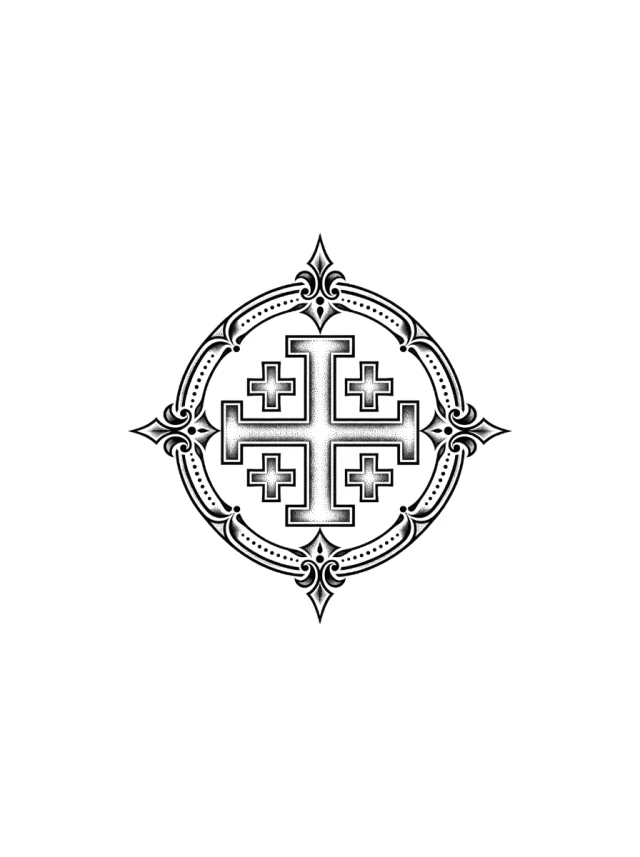
Dotwork tattoos are composed entirely of individual dots. The imagery is built up by varying the space between ink points. This creates a soft gradient-like effect, giving depth, texture, and dimension to the image. Unlike traditional shading needles that create solid areas of color, dotwork uses tiny dots of ink to build up an image. It's impossible to achieve this kind of effect with traditional shading needles. Because of this, dotwork tattoos are also sometimes referred to as stippling or pointillism.
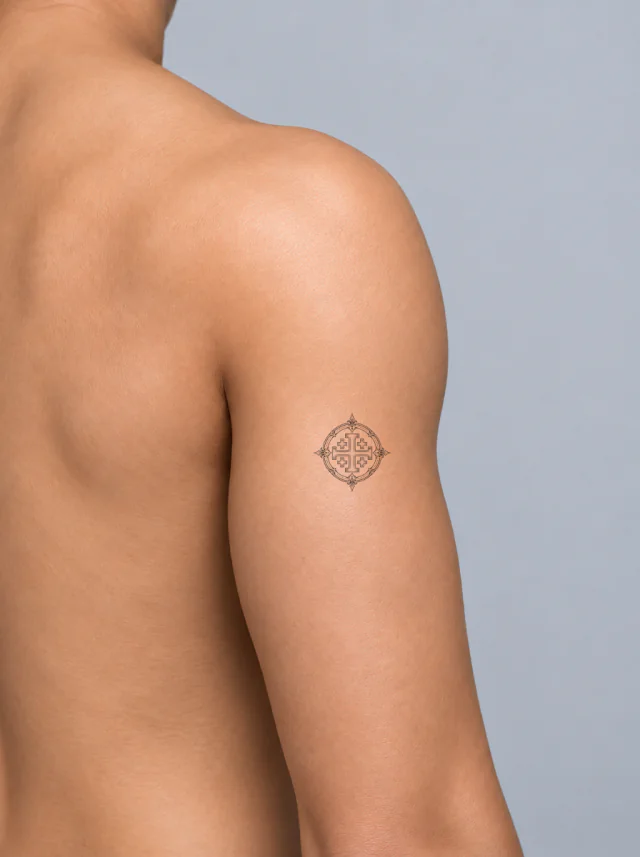
The most popular design subjects for men choosing dotwork tattoos tend to be geometric, mandala, and spiritual tattoos. Animal designs and decorative patterns can also work well with dotwork. For those who like a more elaborate look, there are plenty of options for geometric pattern arm tattoos, black ink geometric, intricate arm designs, and dotwork sleeves. If you're looking for something simpler, there are plenty of options for minimalist dotwork lovers, from three dots symbolizing ellipsis to various small shapes.
Best placements and technique
The strongest body placements for dotwork tattoos on men are the forearm, sternum, shin, and shoulder. Dotwork sleeve tattoos are a recognized larger-coverage format. In terms of placement, dotwork is one of the easiest tattoo styles to do on any part of the body. That’s because it doesn’t require a lot of skin stretching, unlike other tattoo styles that need to stretch the skin to fit around the shape of the design. However, some people find that dotwork tattoos on the back are particularly uncomfortable due to the large surface area covered.
 Clean design
Dotwork can be done with a tattoo machine or by hand-poke (also known as stick and poke). Machine work is often faster for dense stippling, while hand-poked work can produce a distinct, organic texture. Neither method automatically causes less skin trauma or heals faster in every case; technique, placement, session length, skin response, and aftercare all matter.
Pain, healing, cost, and aging
Pain and healing vary by placement, session length, technique, skin response, and aftercare, so dotwork is not automatically less painful or faster-healing than color packing. The visible surface may settle over a few weeks while deeper healing continues. Pricing also varies widely by location, artist, size, and complexity; ask the artist for a quote instead of treating a single hourly range as universal. Since dense dotwork can take a long time to complete, larger pieces may still be expensive.
Dots may expand slightly over time, so spacing between dots is important to keep the design readable. Dots spaced apart will retain readability longer than heavily packed styles. Dotwork tattoos age gracefully compared to heavy color packing. I’ve heard many artists say this about dotwork tattoos in 2026.
Mixing dotwork with other styles
Dotwork tattoos can be blended with other tattoo styles. You can combine them with fine lines, stippling, or traditional bold outlines to make striking contrasts. Black and gray are typical for dotwork tattoos, but shades of color are sometimes added for an attractive contrast.