
I recently had the opportunity to speak with two tattoo artists who have done many patchwork sleeves for their clients. Both of them are very experienced and talented, and both have a great understanding of how to make a mixed-style sleeve work.
Monolith Studio has been doing patchwork tattoos for quite some time, and they’re very good at mixing styles. When they do a patchwork sleeve, it’s because they want to show off different artistic voices. I love that idea. There’s something really interesting about having so many different artists contribute to one piece. And while there’s no question that each artist brings his or her own style to the piece, it doesn’t mean that those styles can’t be coordinated.
Think Tank Tattoo is also an experienced studio that does lots of patchwork tattoos. They tend to focus on traditional tattoos, but they’ve definitely worked on some patchwork pieces that include other styles as well. What I like about Think Tank Tattoo’s approach to mixed-style patchwork sleeves is that they don’t necessarily mix styles just for the sake of mixing. Instead, they consider how the layout can coordinate across styles and artists. For example, they might have a geometric form in one area of the arm, and then have illustrative figures in another part of the arm, but they’ll make sure that the layout of the geometric forms and the layout of the illustrative figures are coordinated. The same goes for color choices. If one piece uses black ink, and another piece uses detailed realism, they’ll still look for ways to coordinate the palette.
But even if you’re not interested in working with multiple artists on your sleeve, you can still plan out a patchwork design. You can decide whether you’d prefer to collect distinct artistic voices (as Monolith Studio does) or to choose one artist or artists with similar styles (as ny00n recommends in an Instagram caption). Either way, it’s important to have shared goals and expectations when coordinating the various contributors to your sleeve.
So what are some things to keep in mind when planning a patchwork mixed style tattoo sleeve?
Deliberate Composition
One thing that makes a patchwork tattoo sleeve successful is deliberate composition. It’s easy to think that because you’re putting together several different pieces into one design, you can pretty much ignore spacing, recurring shapes, and related subjects. But in reality, these things are what help connect all the individual pieces while still preserving their different rendering styles.
For example, if you have a piece that’s rendered in a more traditional style next to a piece that’s fine-line botanicals, you can use shapes to help coordinate them. If you have geometric forms alongside illustrative figures, you can use recurring shapes to help connect the two. If you have blackwork contrasting with detailed realism, you can use line weight and density together to create a visual connection between the pieces.
When you’re looking at a new addition for your sleeve, remember that you can either place it beside existing work or between two pieces of work. Placing it beside existing work gives you the freedom to match every piece’s style, but it also means that you have to worry about how the new addition will fit visually with everything else on the arm. Placing it between two pieces of work allows you to preserve the integrity of the two original pieces, but you have to worry about whether the new addition will fit stylistically with the surrounding pieces.

 Clean design
Assess Existing Work Before Adding New Pieces
If you already have tattoos on your arm, it’s important to assess where they are before placing new additions nearby. In some cases, it’s possible to place bold work next to delicate work, but you have to consider the line weight and density of the pieces together. If you’re considering adding extra separation between the two pieces, that may be a better option than trying to add a medium-weight transition between the two.
The key thing to keep in mind here is that it depends on your arm. Some arms seem to need a lot of distance between pieces, while others can handle more contrast without needing additional space. So it’s important to determine what works best for your arm before making any changes.
Map Out Your Arm
Before you start fitting smaller additions onto your sleeve, you should map out your arm and see where you want to place your larger focal pieces. Think of your arm as planes rather than a flat rectangle. That means that the outer bicep, inner forearm, and outer forearm all have different levels of visibility, movement, and curvature. So it’s important to consider how those differences affect placement.
You’ll also want to take note of how big your focal pieces are compared to the rest of the design. Big pieces will naturally draw more attention to themselves, and they’ll also require more space around them. Small pieces can easily be placed around the bigger ones, but they won’t carry as much visual weight as the bigger pieces. However, you can give the small pieces more visual weight by using size, contrast, detail, or subject matter.
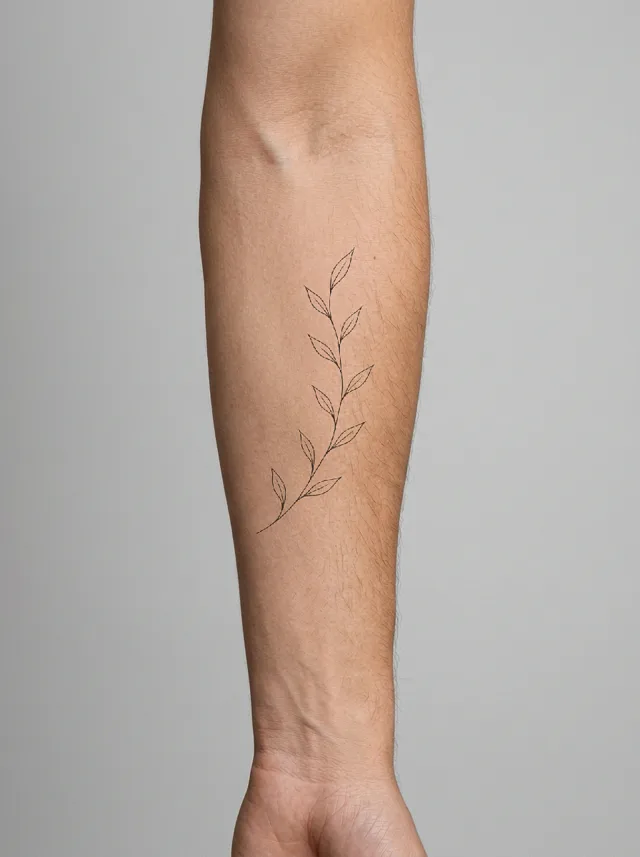
 Clean design
Fitting Smaller Additions Around Larger Focal Pieces
Once your large pieces are mapped out, you can start thinking about where to place your smaller additions. Again, this is where the concept of mapping out your arm comes in handy. It helps you visualize how the pieces will fit together, and it helps you find areas where you can place additions without disrupting the flow of the overall design.
In general, the easiest places to place additions are around the mapped focal pieces. Of course, you’ll want to avoid placing additions directly over or right next to other pieces. You’ll also want to avoid placing additions in areas where they’ll be completely hidden from view. If you’re not careful, you could end up with a bunch of additions that aren’t visible, which would be a huge waste of money.
Instead, look for areas where you can place additions that will be clearly visible, but that won’t distract from the main pieces. Think of it like building a house. You wouldn’t want to build an entire wing of rooms on the side of the house, right? You’d want to leave room for that wing of rooms to be added later.
That’s exactly what I recommend for additions on your arm. Don’t worry about filling every inch of space with additions. Leave room for future additions. It’s amazing how quickly the balance of dark and light can change on an arm once you start adding new additions. Sometimes you’ll add something that looks perfect in isolation, but when you step back and look at the whole arm, it looks completely wrong.
It’s also important to remember that it’s okay to have spaces on your arm. Just because you’ve decided to go with a patchwork sleeve doesn’t mean you have to fill every single inch of your arm with tattoos. It’s perfectly fine to have spaces on your arm, and sometimes those spaces can actually make your sleeve look more balanced and interesting. So don’t feel like you have to rush through the process of figuring out where everything goes. Take your time. Enjoy the process. Have fun with it. And most importantly, make sure that the final result makes you happy.
Palette Choices
When planning out your patchwork sleeve, you’ll probably want to think about your palette as well. Since it’s a mixed-style piece, it doesn’t necessarily mean that your entire sleeve will be black and grey. In fact, you’ll probably want to stick with your favorite colors. But since you’re mixing styles, you’ll want to consider how those styles will look together.
For instance, if you have a piece that’s rendered in a more traditional style next to a piece that’s fine-line botanicals, you’ll probably want to stick with the same basic color palette. But again, you don’t have to repeat the exact same tattoo. You can select a few colors and repeat them throughout the sleeve. Or you can choose a few specific shades of a particular color and repeat those throughout the sleeve. Whatever works for you is fine.
Keep in mind that even if you’re sticking with your favorite colors, it doesn’t mean that your entire sleeve has to be filled with those colors. You can always choose to add a new piece in a different color, but you’ll want to make sure that it fits with the rest of the design. And while you can certainly choose to do an all-black sleeve, it still requires a fair amount of composition decisions to pull it off successfully.
Collecting Distinct Artistic Voices vs. Choosing One Artist or Artists With Similar Styles
When it comes to deciding whether you’d prefer to collect distinct artistic voices or to choose one artist or artists with similar styles, there’s no right or wrong answer. Everyone has their own preferences, and everyone has their own ideas about how a mixed-style patchwork sleeve should look.
What I love about Monolith Studio is that they’re very open to collecting distinct artistic voices. I love that idea. There’s something really interesting about having so many different artists contribute to one piece. And while there’s no question that each artist brings his or her own style to the piece, it doesn’t mean that those styles can’t be coordinated.
But if you’re not interested in working with multiple artists on your sleeve, that’s perfectly fine too. There’s nothing wrong with choosing one artist or artists with similar styles. In fact, I personally prefer that. I love seeing how an artist approaches different subjects and different styles, and I love seeing how they approach the challenge of creating a cohesive design across the arm. I’m not sure if I could ever get enough of an artist’s work, but I know I’d enjoy seeing how they tackle a mixed-style patchwork sleeve.
Regardless of your preference, it’s important to have shared goals and expectations when coordinating the various contributors to your sleeve. Whether you’re working with one artist or multiple artists, it’s important to have a clear vision of how the finished piece should look, and it’s important to communicate that vision to the contributing artists.
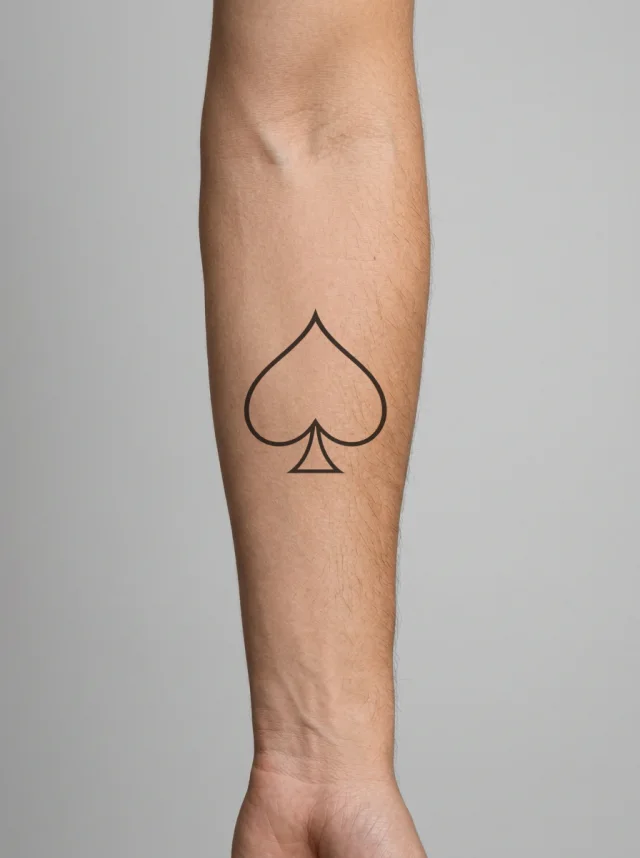
 Clean design
Assembling a Reusable Consultation Brief
I’ve talked to a number of people who have gone through the experience of getting a patchwork sleeve done, and almost all of them said that they ended up going back to their original artist after the first piece was done. I guess it’s not uncommon for someone to go back to their original artist after the first piece is done. But it’s also not uncommon for someone to go back to their original artist after the second piece is done. And it’s also not uncommon for someone to go back to their original artist after the third piece is done.
So what happens when you’re ready to move on to your fourth piece? Do you go back to your original artist? Do you ask a new artist to come in and do your fourth piece? Do you hire a new artist to do your fifth piece? And so on?
Of course, that’s entirely up to you. But if you’re interested in getting a patchwork sleeve done, I suggest that you start with one artist and see how things go. Then, after the first piece is done, decide whether you want to continue with the same artist or move on to someone else.
And if you’re interested in getting a patchwork sleeve done, I highly suggest that you start with one artist and see how things go. After the first piece is done, decide whether you want to continue with the same artist or move on to someone else. Think Tank Tattoo recommends putting together a consultation package that documents your existing tattoos, your priorities, and the spaces you want to leave open. You can share that same brief with each artist so they know what you’re working toward and which areas you want to protect. You’ll also want to look through their healed patchwork portfolios, so you can see how the pieces look together after they’ve healed.