
I’ve been getting a lot of questions lately about micro tattoos. What size qualifies as a micro tattoo? Are there any limits to how small a tattoo can be? How do you know if your design is suitable for tiny scale?
So I thought it might be helpful to take some time to talk about micro tattoos, their limitations, and the factors that affect them.
Defining Micro Tattoos
First of all, when it comes to micro tattoos, there isn’t a single universal cutoff. That’s because “micro” is a term that means different things to different people. Some people use the term for a clean little outline, while others reserve it for an open fine-line piece, or for something small enough to tuck behind an ear.
So rather than trying to define micro by a specific size (like three inches or smaller), I think it’s better to define micro by consequence. In other words, what are the consequences of making a tattoo really tiny? And what types of designs will survive being tiny in scale?
You’ll see some studios define micro as a highly detailed piece three inches or smaller, while popular online examples may be smaller than a quarter, or even fit in a space smaller than a fingernail. They’re usually made with fine lines, often using a single needle or tiny needle groupings. Fine-line work itself is more about technique than size, and not every fine-line tattoo is single needle.
Design Simplicity and Detail
The first thing that comes to mind when thinking about tiny tattoos is simplicity. Tiny tattoos require simplicity. If your design is dense with detail, then no matter how small your tattoo is, you’ll probably find yourself wanting to simplify or enlarge it.
But not every tiny tattoo has to be simple. You can absolutely have tiny realism, but it has to be open shapes. Dense, packed realism won’t work at tiny scale. The same goes for florals. Tiny florals need to be sparse and open. They need breathing room.
Tiny script also needs to be spaced out and simplified. But again, just because something is small doesn’t mean it has to be simplistic. For example, a tiny floral piece can work on the back of someone’s hand when the flowers are kept separated.
That’s quite detailed, right? But notice how much open space there is between each flower. If they had packed those flowers together without spacing, it would have looked like a mess. It wouldn’t have survived the tiny scale.
The same idea can still work in a piece that feels pretty densely packed.
But notice how much open space there is between the details. It’s actually quite a bit more open than most traditional micro-realism tattoos, which tend to be packed tightly. This one also has a very clean line, so it survives the tiny scale well.
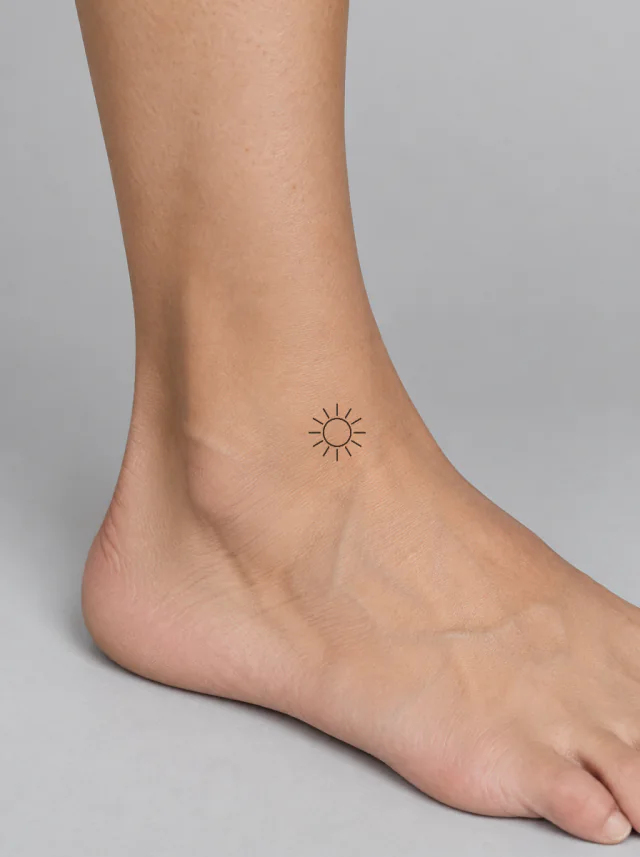
 Clean design
Color Considerations
When it comes to color, it helps to keep things minimal. Tiny tattoos don’t usually look great with lots of color. When you’re working on a tiny scale, adding color tends to pack everything together and make the tattoo feel crowded. So again, simplicity is key.
But again, there are exceptions. Tiny tattoos can absolutely include color. But it should be used wisely. For instance, if you want to use color, you’ll want to avoid having too many colors, and you’ll want to limit the number of colors per area. You also want to avoid having color transitions that require blending, especially within the same area. Color transitions that span multiple areas are okay, but only if you’re careful to keep the transition lines sharp.
Artist Skill and Experience
And finally, the smallest tattoos aren’t necessarily the easiest ones to get done. Just because a design is small doesn’t mean it’s easy. Tiny tattoos often require an artist who specializes in the technique. There are a few artists who specialize in the fine-line technique, and a couple of artists who specialize in the single-needle technique, and a handful who specialize in the tiny needle grouping technique. These are all very technical skills, and they require an artist with steady hands, good control over the depth of the needles, and an eye for detail.
So if you’re considering a micro tattoo, you’ll want to ask your artist if they have experience doing such small tattoos. Ask to see examples of their work that show the level of detail and control needed to create a tiny tattoo. Look for evidence of clean, sharp lines, consistent detail, and healed tattoos that maintain their integrity.
Also, be sure to ask whether they specialize in micro work. While it’s possible for an artist to do a tiny tattoo without specializing in it, it’s not likely. It takes a very specific set of skills, and it’s not something that just happens by accident. Artists who specialize in micro tattoos understand the challenges involved, and they’re prepared to handle the difficulties that come with such tiny scale.
If you’re looking for inspiration for your own micro tattoo, you can check out my Pinterest board for micro tattoos.
Of course, it’s always a good idea to bring along a reference image, and to give your artist a clear idea of what you’re looking for. Don’t assume that because an online image looks tiny, that it will translate well to your skin. Skin texture, movement, friction, and sun exposure all play a role in how a tattoo looks over time, so it’s important to factor those into your decision.
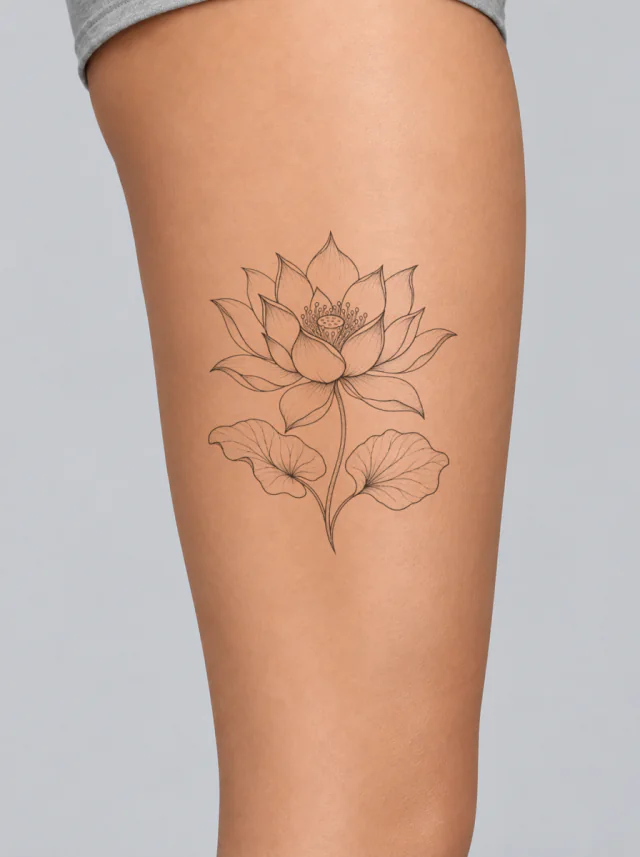
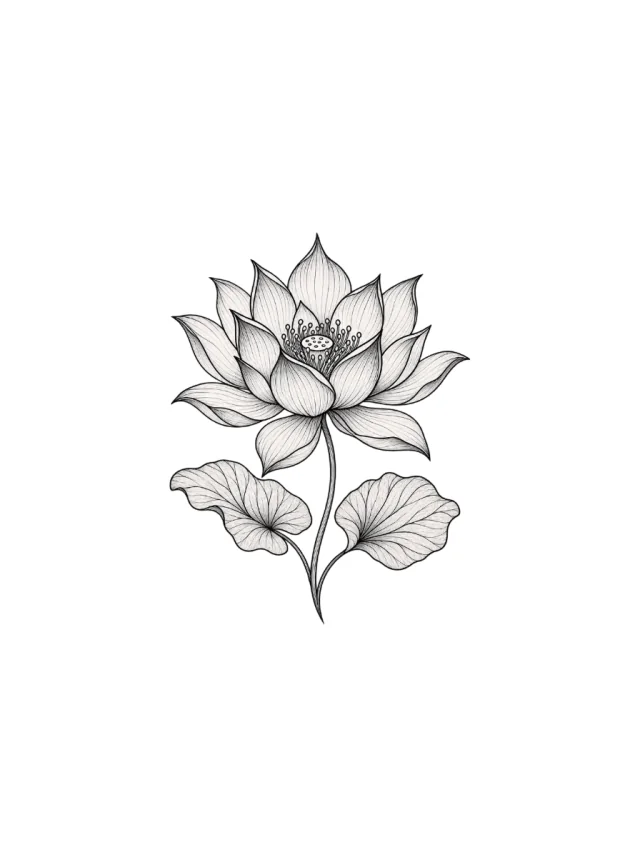 Clean design
Placement and Longevity
Now that we’ve covered the basics of micro tattoos, let’s talk about placements. Obviously, micro tattoos are ideal for discreet placements. But while they’re great for hiding away from view, they’re not always the best choice for longevity. A placement that’s constantly exposed to the elements will age far quicker than one that’s tucked away safely behind the ear, for instance.
In addition, high-movement and high-friction zones are problematic for tiny tattoos. A tattoo on the side of the finger, for instance, may look amazing fresh off the skin, but after a few months of regular use, you’ll likely find that the tiny details have either faded or merged together completely.
Placements that are constantly exposed to the sun also have a tendency to fade quickly. Even if you’re lucky enough to find an artist who specializes in micro tattoos, you still need to be aware of the risks involved with placing a tiny tattoo somewhere that’s going to be constantly exposed to the sun. Because the design starts so small, sun, daily wear, changes in the skin, ink depth, aftercare, and natural aging can make lines blur or fade. It’s not inevitable for every micro tattoo, but tiny script is especially vulnerable because curves and angles can merge; side-of-finger lettering can even fall out quickly.
On the flip side, micro tattoos are excellent for places where you don’t want to draw attention to yourself. A micro tattoo on the wrist, for instance, is perfectly acceptable, but it’s also a perfect place to hide a tattoo. It’s also a great spot for a small, discreet symbol, like a heart outline, semicolon, or smiley face.
The wrist can be discreet, but it’s also a higher-movement area, so don’t confuse easy-to-hide with automatically long-lasting. Fingers and wrists are more susceptible to fine-line spreading over time. If longevity is the priority, lower-friction, flatter areas like the inner forearm, upper arm, back, or thigh generally give tiny details a better chance of staying readable, depending on the design and your artist’s assessment.
Patchwork and Gap Filling
Another advantage of micro tattoos is that they’re ideal for patchwork layouts. They make great gap-fillers. You can use a micro tattoo to fill in the gaps between larger pieces. Or you can use a micro tattoo to anchor a large piece to your body, especially if the piece itself is quite large. For example, you could have a large anchor tattooed on your lower back, and then add a few tiny anchors around the perimeter to reinforce the design.
However, you want to be careful about using micro tattoos as anchors for larger pieces. If you try to use a micro tattoo as an anchor, it’s going to look weak and ineffective. You want to use a larger anchor instead. Micro tattoos are best suited for compact symbols, single stems, slim lines, thin even strokes, etc. Those simple shapes and open-skin designs fill small intentional gaps without making the layout feel heavy. Plan the spacing before you keep adding tattoos; you can move, scale, rotate, and layer pieces in a patchwork layout so the larger tattoos stay the anchors and the tiny ones stay gap-fillers.
Trying Designs Before Commitment
Finally, micro tattoos can also be useful for people who want to try out a design before committing to a larger tattoo. If you’re unsure about a design, you can try out a micro version of it to see if you like it. If you don’t like it, then you can move on to a different design without wasting money and time on a large tattoo that you’ll end up hating.
So while micro tattoos can be a great way to try out a design, they’re not a substitute for bigger tattoos. If you’re planning on getting a big tattoo, then you need to make sure that the design has enough breathing room. Tiny tattoos don’t work well with dense portraiture, dense botanical detail, long quotes, small lettering, etc. You want to simplify or enlarge your design.
With that said, I’m not saying that micro tattoos are inherently bad. They’re just not the best option for everyone. And if you’re considering getting a micro tattoo, then you should definitely take some time to vet your artist. As I mentioned earlier, there are certain signs of technical control that indicate an artist is qualified to do micro tattoos.

 Clean design
Choosing a Qualified Artist
For starters, you want to look for clean, sharp lines. If an artist lacks the control necessary to produce clean, sharp lines, then they’re unlikely to be able to produce clean, sharp lines at tiny scale. In fact, I’d go so far as to say that an artist who struggles to produce clean, sharp lines at normal scale is a risky choice for micro tattoos.
Next, you want to look for consistency in detail. Micro tattoos require incredible precision, so you want to ensure that your artist can consistently reproduce the same level of detail across an entire tattoo. Consistency in detail is essential for micro tattoos.
You also want to look for healed tattoos that maintain their integrity. If an artist is unable to produce a healed tattoo that maintains its integrity, then they’re unlikely to be able to produce a healed tattoo that maintains its integrity at tiny scale. Healing plays a huge role in how a tattoo looks over time, so you want to be sure that your artist understands the healing process and can help you minimize scarring and maximize results.
Other signs of technical control include specialization, reviews, hygiene, equipment, and a steady hand. If an artist lacks any of these qualities, then they’re unlikely to be able to produce a quality micro tattoo.
If you’re looking for a list of artists who specialize in micro tattoos, you can check out my Pinterest board for micro tattoos.
If you’re still unsure whether a micro tattoo is right for you, then I recommend that you bring your concept to your artist and ask if it needs resizing, simplification, relocation, or more internal spacing. Also, ask if you should size it up into a small fine-line or minimalist tattoo. It’s always a good idea to follow sizing and aftercare guidance when deciding on a tattoo, and micro tattoos are no exception.
If you decide that a micro tattoo is right for you, then you’ll want to be sure that your artist has experience doing such small tattoos. You’ll also want to be sure that your artist has the technical skills required to produce clean, sharp lines at tiny scale.