
I love a patchwork tattoos flash sheet. I think they’re great. They give you inspiration and ideas, but it’s important that we understand what exactly flash sheets are. A flash sheet is not a design blueprint. It’s a menu of candidate motifs.
So if you’re looking at a flash sheet and thinking “Oh, this would look amazing on my sleeve!”, then you’re misunderstanding the purpose of flash sheets. A flash sheet is simply a collection of images that can be used as inspiration. They aren’t pre-designed sleeves. They aren’t even pre-designed small motifs that will work perfectly on your body. They’re just pictures of things other people have done with their tattoos, so that you can get an idea of what might work for you.
Building a cohesive theme
If you’re going to use a flash sheet to design your sleeve, then you need to know how to move from scattered inspiration into one cohesive visual direction. You don’t want to force every single motif onto your body, because that won’t create a cohesive design. So where do you start?
First, find one or two motifs that really speak to you. Then find other motifs that match those in terms of style, subject matter, color palette, etc. Keep doing this until you’ve created a general theme or vibe for your sleeve. The more similar the motifs, the easier it’ll be to build a cohesive design.
Here’s a simple example. If I’m designing a patchwork sleeve, I might find a skull motif that I like. Then I’d look for other skulls (or skull-like motifs) that I also like. I might also look for animal motifs, or floral motifs, or heart motifs, or anchor motifs, or blackwork motifs. Eventually, I’d have enough motifs that I could choose 3-5 anchor pieces to begin working on my sleeve.
Then I’d make sure all of those 3-5 pieces were compatible in terms of artist styles. Once I had those main focal pieces on my sleeve, I could gradually fill in the gaps around them with smaller, simpler motifs that still matched the overall theme or vibe.
Of course, this process usually takes place over the course of several sessions. That’s why it’s important to keep the original pieces fully healed before adding new ones. Otherwise, the new pieces may cover up areas of the previous tattoos, making them difficult to see.
Once you’ve selected the main pieces for your sleeve, the rest of the design will fall into place naturally. You’ll want to make sure that the smaller, simpler motifs that you add later on will complement the larger, stronger motifs you already have on your body. And once you’ve decided on the direction of your sleeve, it’ll be easy to pick out the right filler motifs to go along with it.
You don’t need to have everything planned out before placing the first piece on your sleeve. In fact, you shouldn’t. That’s not how these types of tattoo designs work. These kinds of designs develop over time, and they’re often completed over the course of months or even years. As long as you have a loose direction in mind, and you’re planning each new piece so that it flows with the next, you’ll be fine.
 Clean design
Mapping motifs to your body
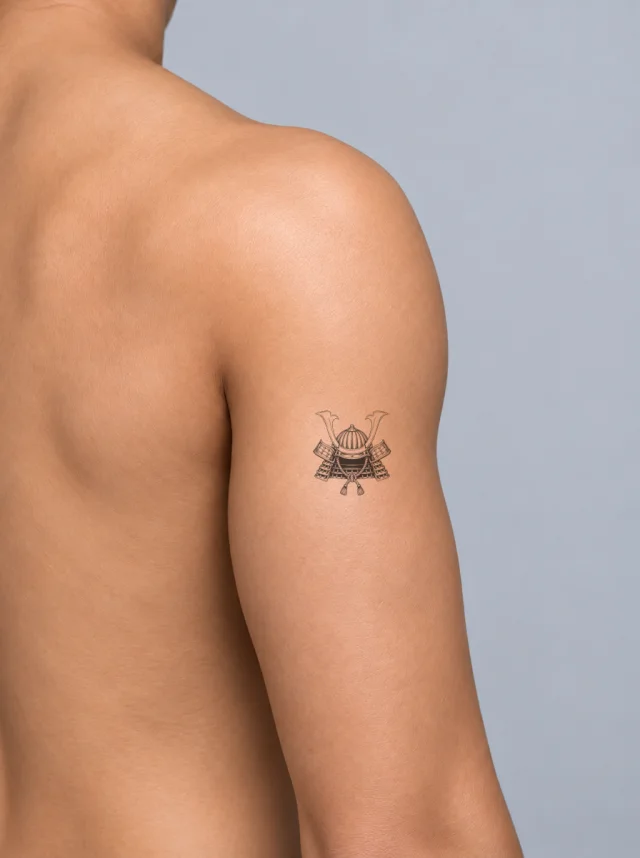
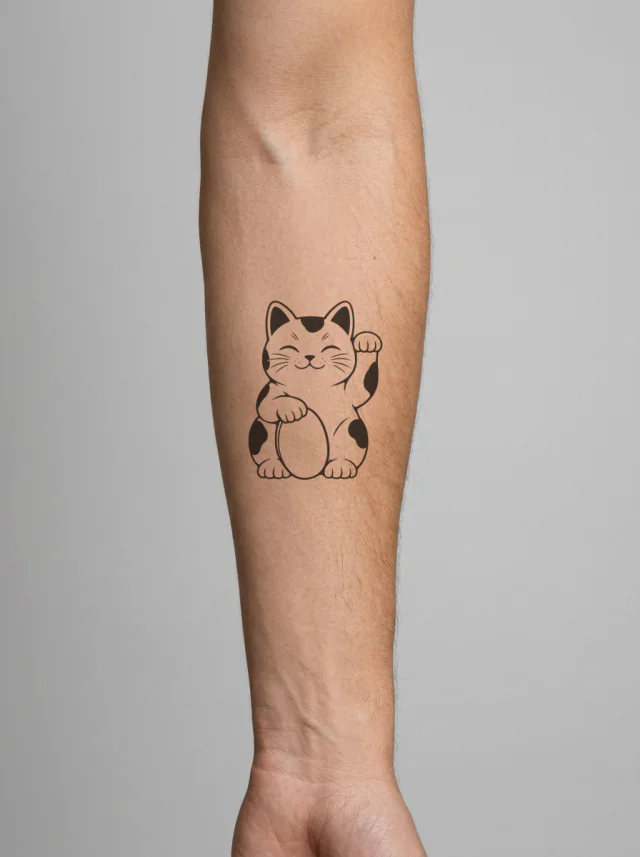
The key is to remember that your body isn’t a canvas. It has structure, curves, angles, and negative space. So when using a flash sheet, it’s important to map the motifs to actual areas of your body rather than assuming that a particular image will fit perfectly in a given area. For example, a shoulder tattoo may seem perfect for a certain motif, but it may not actually read well when placed on your actual shoulder. So you’ll need to resize it, change the placement, and/or alter the motif itself so that it fits and reads well on your body.
It’s also important to remember that there are no strict rules about how the motifs should be arranged. Just because a certain motif was originally designed to be on the outer forearm doesn’t mean it has to stay there. You don’t have to keep it there. The upper shoulder, outer forearm, and elbow can all work as starting points, so try placements that make sense with your sleeve and your anatomy.
When selecting your motifs, you’ll also want to consider how much space they’ll take up on your body. Some motifs will be large and bold, while others will be small and delicate. This will help determine where they’ll go on your body. Larger, bolder motifs can become anchor pieces in strong focal areas, including spots like the shoulder, outer forearm, elbow, shin, outer calf, knee, or top of the thigh. Smaller, more delicate motifs can then help fill gaps around those main pieces as the sleeve develops.
Also, keep in mind that there’s always room for creativity. While the original flash may have been designed to be on a certain part of the body, that doesn’t mean you can’t move it around or reshape it. After all, tattoos are personal art, and it’s okay to put your own personal spin on something else’s design.
Preserving negative space
And finally, when selecting your motifs, you’ll want to preserve as much of the negative space between and around the motifs as possible. Too much of anything tends to make a tattoo look busy, cluttered, and overwhelming. Negative space is what makes a tattoo readable.
So if you’re interested in creating your own patchwork sleeve, start by finding some flash sheets that inspire you. Then ask yourself questions like…
Did the artist create this? Was it purchased from a marketplace? Is it available on Pinterest?
Is this something that another artist can apply to my body?
Does the sale include permission to tattoo? Or is it only a ticket to purchase the artwork for personal use?
Do I have a license to use this?
Can I edit this?
Are there any attribution or booking rules associated with this?
These are all important questions to ask before buying, claiming, or taking a flash motif to another artist.
 Clean design
Understanding platform permissions
Remember that while Pinterest is a great resource for finding inspiration, availability on Pinterest does NOT mean that the flash is free to use. It’s simply a way for artists to share their work online. If you want to use a flash that you found on Pinterest, then you’ll need to find the source of the flash, and contact the artist directly to obtain permission to use it.
Instagram and Etsy are also not proof of authorization. If you find a flash on Instagram, that doesn’t mean that it’s yours to use. And if you find a flash on Etsy, that doesn’t mean that the seller gave you permission to tattoo it. The only way to know for sure is to contact the artist or seller directly.
There are plenty of reasons why someone might post a flash on a visual platform or marketplace. Sometimes it’s because they want to show off their work. Sometimes it’s because they’re hoping to find someone who can bring it to life on skin. But regardless of the reason, the person who posted the flash is the only one who knows whether it can be copied, adapted, or modified.
So if you’re interested in using a flash that you found online, be sure to contact the creator first. Let them know that you’re interested in getting it tattooed, and ask for their permission. If they say yes, then you can proceed. If they say no, then you’ll need to move on to another design.
Even if they do say yes, there’s no guarantee that another artist will agree to tattoo it. There are many different styles of tattooing, and sometimes a design that works for one artist may not work for another. So be prepared to have your design altered, reworked, or completely redesigned if needed.
If you’re interested in building your own patchwork sleeve, then you’ll want to start by finding some flash sheets that inspire you. From there, ask yourself questions like…
Did the artist create this? Was it purchased from a marketplace? Is it available on Pinterest?
Is this something that another artist can apply to my body?
Does the sale include permission to tattoo? Or is it only a ticket to purchase the artwork for personal use?
Do I have a license to use this?
Can I edit this?
Are there any attribution or booking rules associated with this?
These are all important questions to ask before buying, claiming, or taking a flash motif to another artist.
Using flash responsibly
Once you’ve answered these questions, and you’ve determined that it’s safe to use the flash, you can move forward with your design. When sharing flash references, be sure to give credit where it’s due, and leave room for an original adaptation. You can either keep the source link and keep the artist name, or you can share the motif type, style direction, and layout language, and request an original adaptation of the design.
Keep in mind that while flash is a great starting point, it’s not necessarily the final destination. Your sleeve will continue to evolve as you add more pieces to it. So don’t feel like you need to rush through the entire process. Give yourself time to let the sleeve tell its own story.