
There’s a reason why so many men choose small tattoos. Whether it’s because they’re new to the tattoo game, or they’re looking for something that won’t compromise their professional image, there’s no denying that small tattoos are in.
And as we’ve seen with the resurgence of minimalist design trends in just about every area of our lives, minimalism is making a big comeback in the tattoo world. The trend seems to be moving away from full sleeves and large body art towards smaller, more personal expressions.
But what exactly makes a good small tattoo? And how do you find one?
Here are some ideas for small tattoos for men.
Designs That Translate Well At A Small Scale
While there are obviously exceptions, there are certain types of tattoos that translate well at a small scale. These designs tend to have recognizable symbolism, but still allow room for personal interpretation.
Cultural/Indigenous Tattoos
I know I said that cultural/indigenous tattoos can be controversial, but when done respectfully and thoughtfully, they can also be beautiful. They also translate very well at a small scale, and can often be interpreted in different ways based on the person who gets them.
Polynesian tatau (tattoos), Māori tā moko, Samoan pe’a, Filipino batok, and First Nations designs all lend themselves well to small tattoos.
Nature Motifs
If you love nature, then you’ll probably love having a nature-themed tattoo. But again, these should be kept simple and not too detailed.
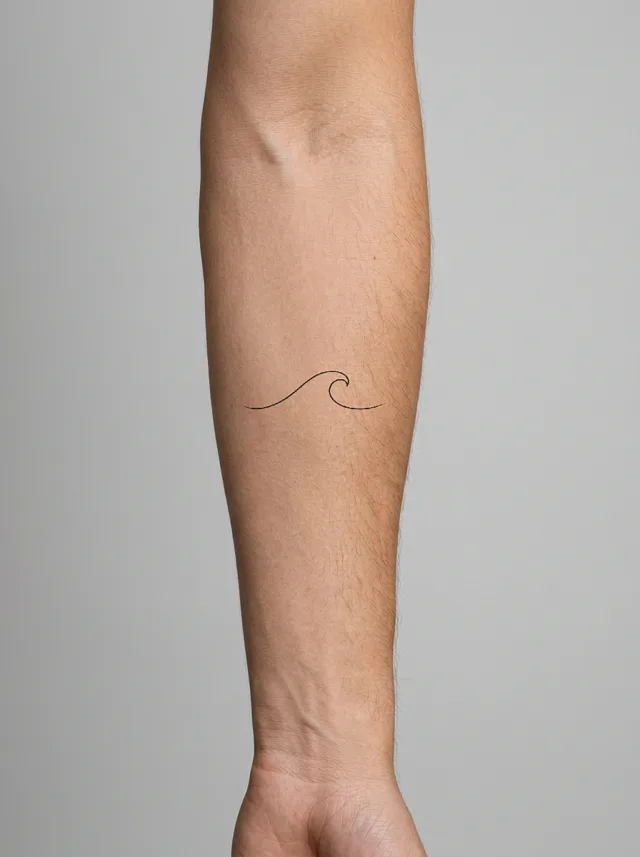
 Clean design
Some of my favorite nature motifs include mountain and camping designs. There’s a lot of potential here, but if you go overboard with detail, your tiny tattoo could look cluttered.
Small Concept Tattoos
This category includes things like shoulder tattoos, tiny symbolic designs, etc. For example, a simple “V” symbol could represent victory, or maybe even the letter “V” as in “Victory.” Or a tiny “M” could represent the word “man,” or even “me.”
Symbolic tattoos are always great options for small tattoos. Just make sure that whatever you choose has meaning to you personally.
What NOT To Do…
Now, I want to warn you against trying to get a complex scene inked onto a coin-sized piece of skin. If you’re thinking about getting a tattoo that looks like this…
…you’ll need to think twice about getting it on your arm. It’s going to take way too much time, and it’s going to require way too much skill. You might want to consider a larger piece of body real estate instead.
Placement Tips
Of course, the placement of your tattoo is just as important as the design itself. So let’s talk about that.
First off, inner forearm tattoos are a great option. They’re easily hidden, and they’re easy to show off. Tricep tattoos are also a great option. If you’re looking for something that will be visible at work, then you’ll want to avoid the back of the neck, unless you’re in a very conservative industry. Collarbone tattoos are another great option, especially if you’re looking for something subtle.
The wrist is a great place for a small tattoo. If you’re into jewelry, then you can easily incorporate your tattoo with your accessories. But keep in mind that wrist tattoos can be hard to see sometimes.

 Clean design
Session Expectations
You may be wondering how long the session will take. A simple small tattoo may be completed in one short appointment, but setup, placement, detail, color, and the artist’s process can make the timing vary substantially. Pain also depends heavily on placement and personal tolerance, so a fixed score such as “2–4 out of 10” is not reliable for everyone.
Healing Timeline
A new tattoo often looks substantially more settled after the first few weeks, but there is no single healing deadline. Deeper healing can take longer, depending on the tattoo, placement, skin, health, and aftercare. Follow your artist’s instructions and seek medical advice if redness, swelling, pain, warmth, or drainage is worsening rather than improving.
Cost Realities
I don’t recommend shopping around for the cheapest price possible on a small tattoo. After all, it’s not like you’re buying a T-shirt or something. Tattoo shops have minimums regardless of the size of the tattoo, and paying a lower rate doesn’t reflect the artist’s skill in pulling straight lines and managing micro-details. It reflects the volume of ink used.