
I know that, for many people, semicolon tattoo significance is tied to mental health awareness, suicide prevention, and other similar causes. But the semicolon is also used as a symbol of hope, survival, recovery, grief, and more.
Semicolon Tattoo Significance and Continuation
The semicolon is often associated with continuation. It means that a sentence isn’t over, but rather continues on. So when someone gets a semicolon tattoo, it can represent a story that is not over — whether that story involves hope, survival, recovery, or grief. It can also be a reminder of something personal, like a literary reference or a private memory.
But what does it mean? And why would someone choose this particular punctuation mark?
Project Semicolon and Mental Health Awareness
Well, in 2013, Amy Bleuel started sharing her semicolon tattoo online after she lost her father to suicide when she was 18 years old. She wanted to show that even though his life ended, his story wasn’t over. She didn’t want people to think that he had “given up” or “failed.” Rather, she wanted to show that his life continued through her and others who knew him.
That was the beginning of Project Semicolon. Since then, thousands of people have chosen to get semicolon tattoos to raise awareness about mental health and suicide prevention. In Project Semicolon’s metaphor, you’re the author, and the sentence is your life. The semicolon represents your choice to continue that sentence.
Personal Reasons for a Semicolon Tattoo
So if you’re considering getting a semicolon tattoo, your reasons might include:
Solidarity — You may wear it to support loved ones who are struggling with mental illness or depression.
Remembrance — You may wear it to honor someone who struggled with mental illness or who took their own life.
Literary connection — You may love literature and just happen to have a personal connection to the semicolon.
And of course, some people choose it simply because they love the look of the semicolon and how it looks next to other symbols and punctuation marks.
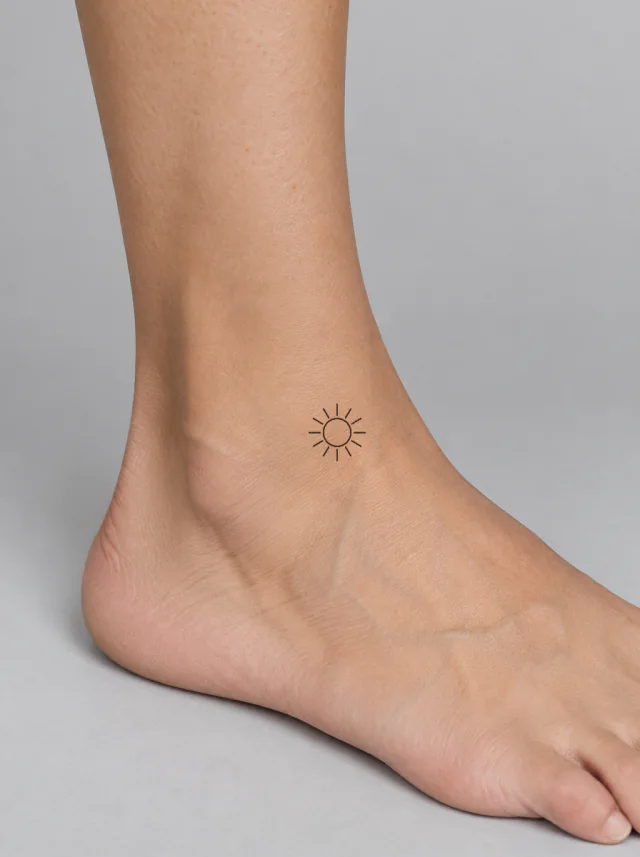
 Clean design
Respecting the Wearer’s Privacy
But keep in mind that while many people associate semicolons with mental health awareness, it doesn’t necessarily mean that the person wearing one has had any kind of mental health experience. Just because you see a semicolon tattoo doesn’t mean that the wearer has been diagnosed with a mental illness, or attempted suicide, or has completed recovery. Nor does it mean that the person is willing to talk about it. It could mean anything at all, and it’s entirely personal.
In fact, it’s possible that the person never even thought about mental health at all, and chose the semicolon purely because they liked the look of it.
If you’re considering getting a semicolon tattoo, make sure you understand what it means to you personally. If you’re doing it for solidarity with someone you love, then that’s great! But don’t assume that the person wearing it is looking for conversation about mental health. They may welcome the conversation, and they may not. That’s entirely up to them.
Choosing Your Design and Placement
Now, if you’ve decided that a semicolon tattoo is right for you, then you’ll need to decide how you’d like to incorporate it into your overall design. Do you want it as a standalone mark beside your existing patchwork pieces? Or do you want it incorporated into your overall design so that it becomes part of the larger motif?
It’s important to remember that the more recognizable the symbol is, the more likely it will invite questions from others. So if you want to keep your semicolon tattoo as a very private symbol, it might be best to place it somewhere where it won’t be noticed by anyone else. The wrist is usually a good choice since it’s visible, but still very personal.
Of course, if you want your semicolon tattoo to be recognized by others, then you’ll probably want to place it somewhere where it will be easily seen. The ankle, ribs, or upper arm are good choices for this. Of course, the more exposed an area is, the less private it can be depending on your situation. The behind-the-ear placement is always a favorite for small, curved areas that seem to favor simplicity. But how private any placement is depends on what your clothes and hair actually cover. You’ll also need to consider whether the full design’s proportions fit the area you choose.

 Clean design
Incorporating the Semicolon Into a Larger Piece
As far as incorporating the semicolon into a larger piece goes, it really depends on how much space you have available. A flower stem with a semicolon could be a nice touch to signify growth or remembrance. A butterfly body with a semicolon could be a nice addition to signify change or survival.
When choosing a design that incorporates the semicolon, make sure that the associations you choose fit with the wearer. For example, if you’re designing a floral piece, then the semicolon should fit into the whole piece. If you’re designing a butterfly piece, then the semicolon should fit into the whole piece. If you’re designing a piece with a date, quote, and decorative border, then the semicolon should fit into the whole piece. The key is to make sure that each individual detail works together to create one cohesive, meaningful design.
Size Spacing and Clarity
A semicolon alone may be hard to read in a small tattoo, so having surrounding pieces can help preserve its clarity. However, too much crowding can reduce readability. Ask your artist whether there’s enough room for the dot, the comma’s curve, and the empty space that keeps them distinct. Making them too small can reduce clarity. A flat reference image alone can’t tell you what size will work on your skin with your chosen placement and style. If you’re creating a large piece that includes multiple elements, such as a semicolon, flower, butterfly, date, quote, and decorative border, then you’ll need to make sure that these details work well together and aren’t competing against one another.
Keep in mind that size, style, placement, and surrounding patchwork all affect one another. The exact dimensions and gaps between elements must be assessed by the artist for the intended placement.
Depending on your desired size, you may require more room on your skin.
This is why it’s so important to plan ahead and discuss your ideas with your artist before you commit to anything. If you have specific ideas in mind, then share them with your artist and let them help you figure out how to best incorporate them into your design.