
I’ve been meaning to write about tiger lily tattoos for a while now. I’ve also wanted to share my own personal experience with this flower, but that’s probably better saved for another time. Today, I want to focus on the design possibilities of tiger lily tattoos, including their symbolism, tattoo styles, and placement ideas.
First, let me be clear about what we’re talking about here. There are several flowers that have names similar to “tiger lily,” so I want to make sure we’re all on the same page regarding which one we’re discussing. The flower in question is not the Portland studio called TigerLily Tattoo. That’s an entirely different topic. This is about the actual flower known as a tiger lily.
Recognizing the Flower
The most common image associated with the tiger lily is also a very accurate representation of the flower.
So what makes the tiger lily such a unique and recognizable flower? Well, the first thing that comes to mind is its distinctive silhouette. You can recognize a tiger lily just by looking at its overall shape. It’s definitely different from the more traditional upright lilies that we see so often. The tiger lily has a pendulous recurved form, which is why it’s sometimes referred to as a “bowl” or “cup” shaped bloom.
That said, there are some details that are specific to the tiger lily that aren’t necessarily present in other types of lilies. Let’s take a look at those:
• Six recurved tepals (the petals and sepals of a flower)
• Downward-facing bloom
• Bright orange color
• Dark inner spots
• Exserted anthers and stigma (stamen parts that stick out of the flower)
• Straight stem
• Lanceolate alternate leaves
• Leaf-axil bulbils (small bulbs growing in the leaf axils)
The flowers are typically 3–6 inches in diameter, and the stems usually grow somewhere between 2 and 6 feet tall.
Symbolism and Meaning
In terms of symbolism, the tiger lily doesn’t have a universally recognized meaning like many other flowers do. In Japan, it’s known as Oni-yuri, which translates to “demon lily.” According to some sources, the tiger lily was used to symbolize wealth and prosperity in Japanese culture. Other sources claim that it was used to represent pride and confidence during the Victorian era.
Other sources say that the tiger lily represents strength and beauty, courage, and resilience. But since these meanings seem to be derived from interpretations rather than documented associations, they may be more reflective of modern-day perspectives than historical ones.
Of course, it’s also possible that the tiger lily holds a completely different significance for someone else. And that’s okay! Ultimately, the meaning behind your tiger lily tattoo will depend on how you interpret it personally.
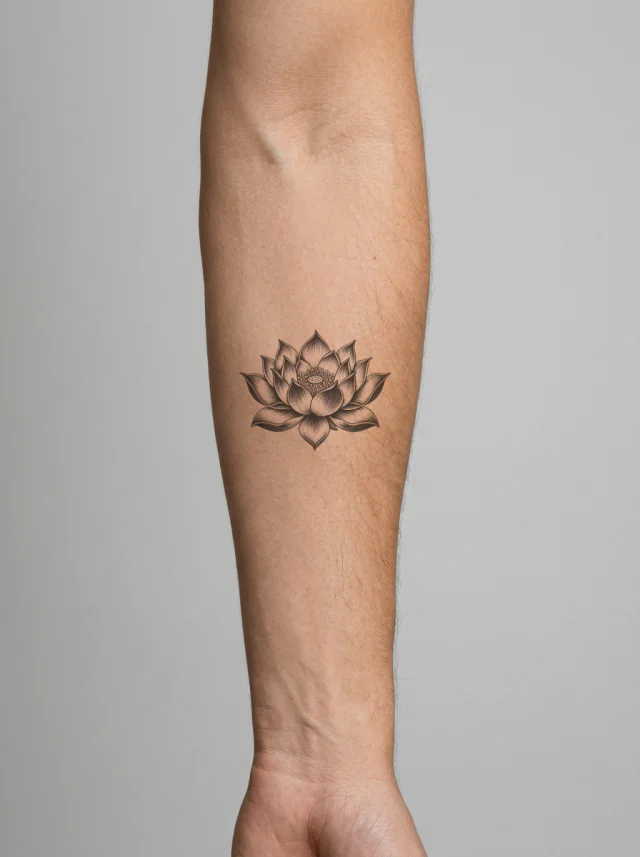
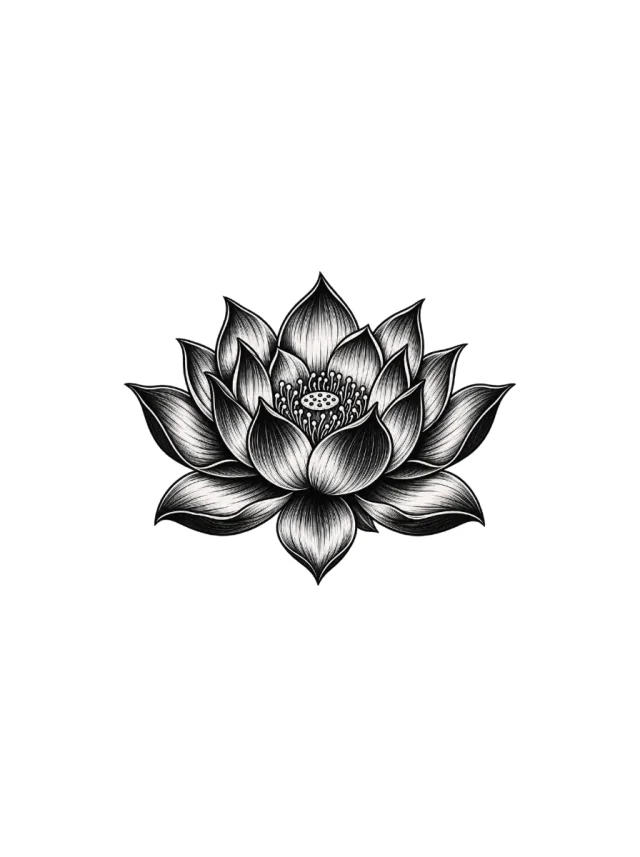 Clean design
Tattoo Style Options
Now that we’ve got the basics down, let’s talk about how you can incorporate a tiger lily into your tattoo designs. First, consider the style. How well does each style preserve the defining characteristics of the tiger lily?
Color realism – This style would require a lot of detail, especially when it comes to the spotting on the bloom. While the tiger lily isn’t as colorful as other flowers, the bright orange of the bloom and the dark inner spots are two defining features. So if you’re considering a realistic-style tiger lily tattoo, you’ll need to keep those in mind.
Botanical color – A botanical-style tiger lily tattoo would emphasize the natural colors of the flower without adding any artificial enhancements. Since tiger lilies are naturally quite colorful, a botanical-style design could work really well.
Black-and-grey – A black-and-grey-style tiger lily tattoo would rely heavily on contrast to create depth and dimension. This is a good option for those who prefer a simpler, less detailed design.
Fine-line – Fine-line tattoos usually include a lot of intricate detail, so this style could work really well for a tiger lily. However, you’ll need to keep in mind that fine-line tattoos are best suited for larger pieces, because the fine lines tend to disappear when shrunk too small.
Illustrative – An illustrative-style tiger lily tattoo would likely be the least detailed of the options listed above. This is a great option for those who don’t want to add too much extra detail to their tiger lily design.
Neo-traditional – Neo-traditional tattoos are generally bold and colorful, so this style would definitely work well for a tiger lily. You’d want to use a lot of reds, oranges, yellows, and greens to bring out the colors of the tiger lily.
Bold blackwork – Blackwork tattoos are typically simple and geometric, so this style wouldn’t work very well for a tiger lily. However, you could incorporate a tiger lily into a larger piece of blackwork artwork. For fine-line or tiny versions, use fewer bulbils, leaves, spots, and stamen details, but keep the recurved silhouette easy to read.
If you’re interested in creating a tiger lily tattoo, then I recommend working with an artist who specializes in botanical tattoos. These artists understand the intricacies of floral tattoos and know exactly how to incorporate all of the necessary details.
Placement and Composition
For a standalone tiger lily tattoo, I think the simplest approach would be to use the natural habit of the flower to guide your composition. For example, you could draw a single hanging bloom, or a vertical stem with a few leaves. Or you could go for something a little more dramatic with a cropped macro view of the flower itself. A vertical stem works naturally on the forearm, inner arm, calf, or lower leg, while a rounder single bloom can sit nicely on a shoulder, thigh, chest, or back. Fit the silhouette to that spot first, and think about the scale on skin rather than on your phone screen, because fine detail can disappear when a design is shrunk down.
But if you’re planning on incorporating your tiger lily into a patchwork layout, then you’ll need to consider how it will fit into the rest of the design. Will it act as a narrow vertical filler between two other tattoos? Or will it serve as a larger color anchor among other blackwork pieces? If you decide to place your tiger lily somewhere where it will be surrounded by other tattoos, then you’ll need to make sure that the surrounding outlines won’t bleed into your tiger lily design.
One of the easiest ways to accomplish this is to use negative space. Simply leave enough room around your tiger lily design so that it’s clearly separated from the neighboring tattoos. A stem extension, small leaves, dots, sparks, or stars can tie the tiger lily to nearby pieces without letting their outlines merge.

 Clean design
Design Priorities
When designing your tiger lily tattoo, remember that it’s the overall silhouette that’s most important. Details matter, but if you’re going for a smaller scale design, then you’ll need to simplify things quite a bit. If you try to include everything, you’ll end up with a design that looks cluttered and confusing.
I think the key to a successful tiger lily tattoo lies in keeping things simple. Don’t get bogged down trying to include every detail. Focus on making the overall silhouette of the flower as clear and readable as possible. Once you’ve got that down, then you can worry about the finer details. This is especially true for a tiny wrist or hand tattoo: use a simplified bloom with fewer spots, and leave out dense stamens or bulbils.
Remember, the goal is to make your tiger lily tattoo recognizable. Don’t forget that the flower itself is quite colorful, so you’ll want to make sure that your design preserves the vibrant orange of the bloom. Also, keep in mind that the spotting on the bloom is another defining feature of the tiger lily, so be sure to include that.
If you’re looking for some inspiration, then I recommend searching online for images of tiger lily tattoos. You’ll find plenty of examples of how people have incorporated this beautiful flower into their tattoos.
Working With an Artist
As always, I encourage you to build a strong relationship with your tattoo artist before beginning your project. After all, you’ll be spending quite a bit of time together, so it’s important that you feel comfortable with your artist’s artistic vision and style. For the consultation, bring your preferred bloom angle, botanical details to include or omit, finish, style references, placement, scale, orientation, neighboring tattoos, and personal meaning. Ask for an original drawing rather than a replication of an existing image.
Once you’ve found an artist that you’re happy with, you’ll need to build a strong relationship with them. They’ll spend quite a bit of time with you, so it’s important that you feel comfortable with their artistic vision and style.
I hope you enjoyed this post about tiger lily tattoos! If you have any questions, please feel free to ask.