When it comes to expressing love through tattoos, the kanji for love is your most direct choice.
I’ve written a lot about Japanese tattoos. I’ve written about how they’re different from Western tattoos, how some are associated with criminality, how some are associated with religious devotion, etc. But there’s one topic I haven’t touched on yet: what kinds of tattoos express love in Japan. In this post, I’ll talk about that.
First of all, if you want to express love in Japanese irezumi (tattooing), the most direct and unambiguous choice is the kanji character for love, which is 爱. This is the simplest option — just put the kanji on your body and people will know exactly what you mean. There are also other kanji characters that can be used to represent love, but 爱 is by far the most common.
Of course, many Japanese tattoo motifs are symbolic, so they can carry multiple meanings depending on context. For example, the Hannya mask (which looks like a horned face) is often associated with jealousy or vengeance. And the koi fish is a symbol of perseverance. But those kinds of associations are only possible because each of these images has several possible readings. The same image might represent love, hate, vengeance, or perseverance, depending on its placement in a larger design, or how it interacts with surrounding symbols. If you just wanted to use an image to represent love, then it’s best to go with something that has no other possible meanings — like 爱.

 Clean design
Love-Related Motifs and Their Meanings
The Hannya mask is the irezumi motif most explicitly connected to love-related emotion. It represents a vengeful woman who was heartbroken when her lover died. Jealousy transformed her into a monster, and now she roams the world seeking revenge. Wearing the Hannya mask is a reminder to master the dark emotions that come from attachment. But it’s not really about love itself — it’s about love gone wrong.
Many traditional Japanese tattoos have background elements that carry independent symbolic meaning. Waves, wind bars, clouds, flowers, etc., all have their own meanings. When designing a traditional irezumi, you choose which background elements to include based on whether they agree with the subject in terms of season, element, and mood. Every creature, every element, and every flower belongs to a precise seasonal context. The art of combining symbols determines the final individual meaning of the whole piece.
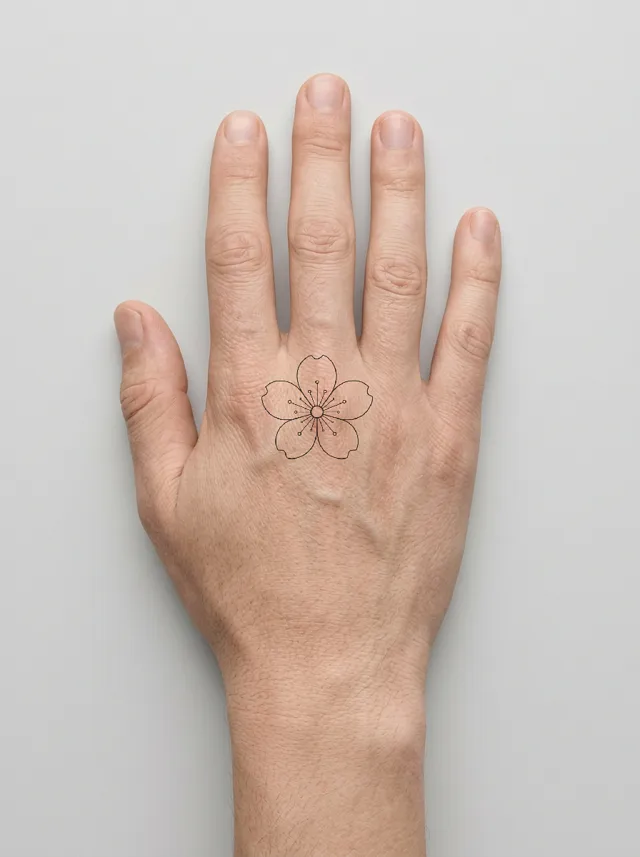
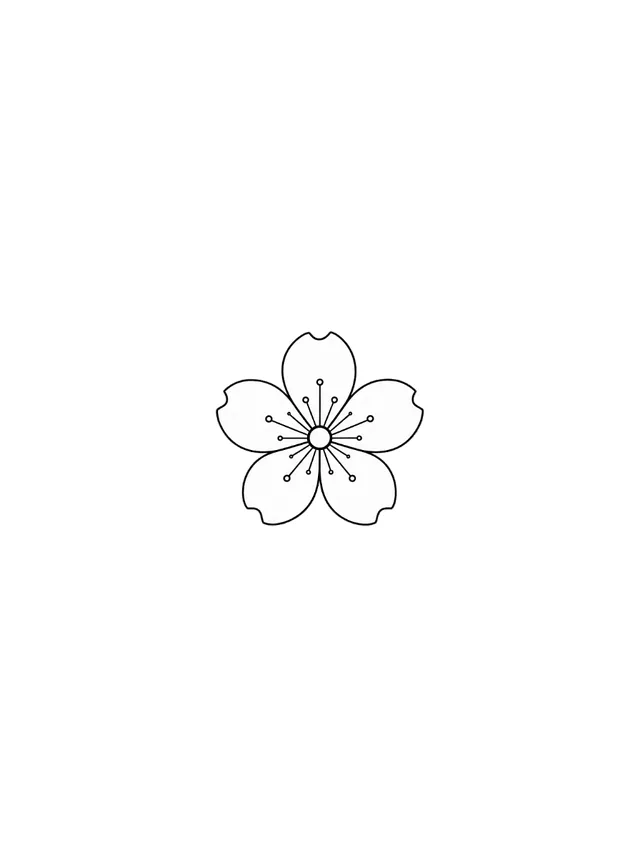 Clean design
Traditional irezumi composition treats the whole body as a planned garment. The layout is planned out before any ink is applied, much like a dressmaker would plan out a dress. Layouts have names, and certain layouts are more appropriate than others for certain placements. These conventions are established by working tattooers over time, and they’re part of the meaning of the motif itself. A traditional artist will align his artwork with the wearer’s physical anatomy and with his life story.
Mistakes to Avoid
If you’re going to get a traditional Japanese tattoo, you should understand the orientation, pairing rules, and precise meaning of the symbols you’re using. Otherwise, you risk choosing a symbol without understanding its full meaning. For example, if you choose a koi fish, you need to make sure it’s oriented correctly (facing forward), that it’s paired properly (with waves), and that it doesn’t appear upside-down. An upside-down koi represents failure instead of perseverance, and once you’ve got that on your skin, it becomes permanent. Artists who don’t have true knowledge of the symbols they’re using risk carrying incorrect or joke meaning permanently. So if you’re going to get a traditional Japanese tattoo, make sure that your artist specializes in the style, and knows the symbols genuinely.